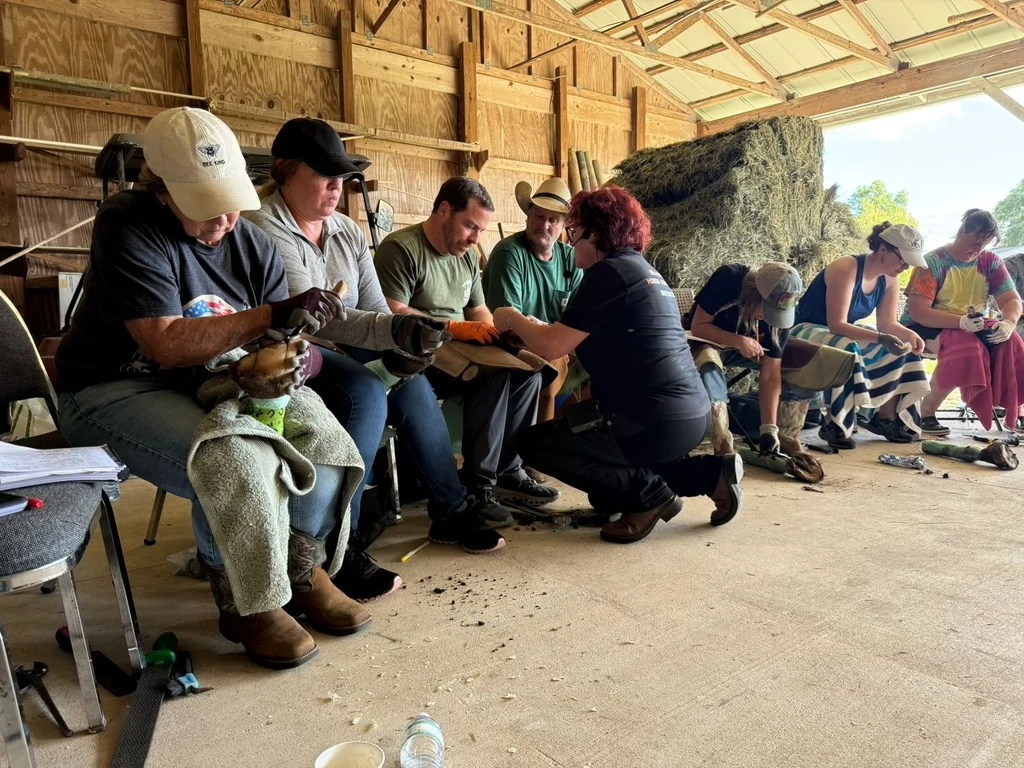
Lindsay kneeling beside participants as they examine hooves together at an HM teaching workshop

Our story

About Hoofing Marvellous

Helping owners observe, understand and care for their equines’ feet.

Raising standards

Why raising standards asks so much of the equine world

Hoofing Marvellous is an international teaching organisation built around a clear purpose: raising standards in hoof care through education, anatomical understanding and careful observation. We help owners and professionals recognise what they are seeing, document changes and make better-informed decisions for the equines in their care. That purpose has also led us to question some of the explanations and practices widely accepted in the equine world.

HM’s position raises an uncomfortable possibility: that hoof-care decisions may be contributing to structural problems commonly attributed primarily to disease.

In many cases we examine, we interpret the history and changing hoof structure as evidence that imbalance has developed through the way the foot has been maintained. We believe that contribution is being underestimated.

If that interpretation is correct, the implications extend across education, professional practice and research. It would require us to reconsider how balance is taught, how interventions are assessed and how changes are documented throughout an equine’s life.

That is a substantial change. It challenges familiar explanations and practices that people have learned, trusted and used with the intention of helping horses.

Questioning a practice is not an accusation that the person using it intends harm.

Owners, vets, farriers and trimmers can all be acting conscientiously within the education available to them. Our challenge concerns what that education teaches people to recognise, the decisions it supports and whether the resulting changes are followed closely enough.

A distorted foot seen today cannot tell its whole history. Without earlier photographs, comparable radiographs where clinically appropriate, trimming records and observations of comfort and movement, it is difficult to establish when the changes began or what contributed to them.

We are proposing a concerted effort to build that history. Owners and professionals both have a role: recording the starting condition, documenting what changes at each trim and following the response over time.

Those records must include improvement, deterioration and unsuccessful outcomes. They must also be capable of challenging HM’s interpretation.

Equines are being lost after severe hoof damage. We believe errors in hoof care can be a fundamental contributor in many such cases, and that this possibility deserves serious investigation.

The purpose is to raise standards, recognise problems earlier and reduce avoidable suffering. That requires clear explanations, shared records and a willingness to examine the effects of our own decisions.

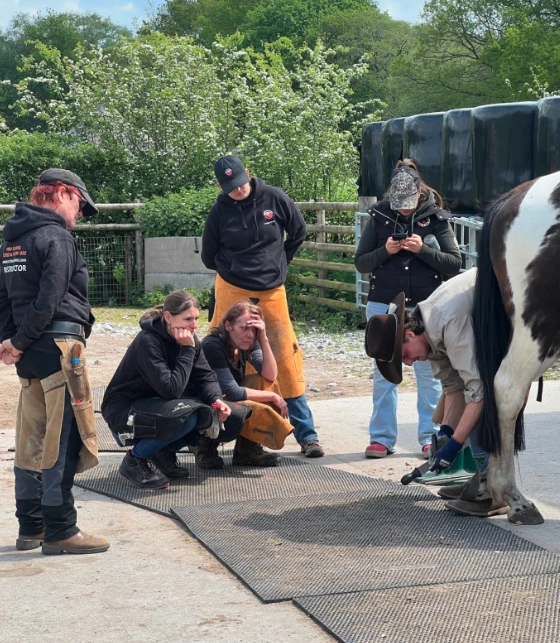
Will demonstrating a hind-foot trim to students while Lindsay observes.
Will, one of our HMB Professionals, demonstrates a hind-foot trim and explains his approach to students, with Lindsay observing alongside them.

Observe the horse. Document the change. Teach others to do the same.

Hoofing Marvellous was founded by Lindsay Setchell. More than twenty years of rehabilitation work, anatomical examination and observation of changing feet have shaped the clinical framework we teach today.

Our starting point is to examine the relationships between the hoof capsule, the structures within it and the way the equine stands and moves. We then follow change over time.

That means asking what happened before the photograph or radiograph in front of us. What did the foot look like previously? What was changed at each trim? How did comfort and movement change?

Our teaching encourages owners and professionals to build that record, question their assumptions and explain the reasoning behind their decisions.

Why owners come to HM - and stay

Many owners find us when they are worried, exhausted or struggling to understand why their equine’s feet are not improving.

Some describe improvements during rehabilitation after previous approaches had not brought the progress they hoped for. Their experiences matter. Understanding them requires the history, the records and the circumstances of each animal.

What owners also tell us they value is learning to see more: recognising landmarks, photographing consistently, following changes and asking more informed questions.

Education gives them a meaningful role in the process. They spend time with their equines every day, and their observations can help build a clearer picture between professional visits.

Recovery is individual. Education and documentation help us examine progress honestly, including when it is limited or does not happen.

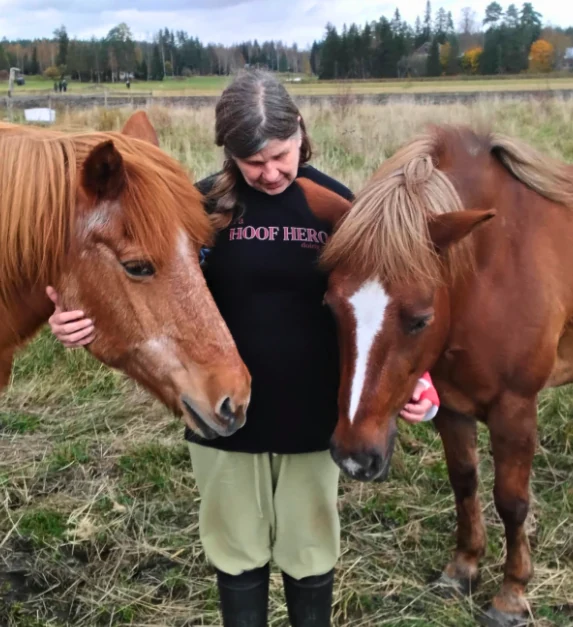
Pia standing between her two horses in Finland.
Pia, from Finland, with her two horses, a mother and daughter. Both experienced hoof problems requiring rehabilitation. Drawing on HM’s teaching, Pia carried out their rehabilitation herself.

Understanding HM

Why does Hoofing Marvellous attract controversy?

You may have heard strong, conflicting opinions about HM. It is reasonable to want clear answers about what we teach and why.

Our approach challenges established explanations of hoof distortion and the role hoof-care decisions can play in its development. That disagreement has practical consequences for how equines’ feet are assessed and treated.

Below, we address the questions people most often bring to us: what we mean by laminitis, how we interpret changes involving P3, why a rehabilitating hoof can look unfamiliar, and how we make decisions about balance and recovery.

We explain our reasoning and welcome careful questions about our own work.

Question 1

Why does HM question the way “laminitis” is understood?

The word “laminitis” is often used in conversations about inflammation, pain, lamellar damage, changes in the position of P3 and distortion of the hoof capsule.

Our concern is that these findings can become bundled together, with one assumed explanation for how they developed.

Within The Phoenix Way, hoof capsule divergence is central to how we interpret many distorted feet. By this, we mean the capsule growing out of anatomical alignment with the structures it houses.

We question whether the history of that changing capsule, including its trimming and loading, has been examined closely enough before its distortion is attributed to a disease process.

This is a substantive disagreement about causation. It calls for careful records and investigation, welcoming scrutiny of our own interpretation.

Back to questions ↑

Question 2

Are you saying diet and metabolic health do not matter?

Diet, metabolic health and management deserve attention. Our position is that they should not replace examination of the hoof itself.

When a horse has metabolic findings and a distorted hoof, we question whether their coexistence establishes how that particular distortion developed.

We want to understand the sequence: what changed first, how the foot was maintained, and what happened to its structure and comfort over time.

We also ask how prolonged pain, stress and inflammation may interact with metabolic health. The proposed contribution of that pathway needs investigation; it cannot be established from a hoof photograph.

Our challenge concerns the causal explanation given to the structural changes. It is not a reason to disregard an individual animal’s nutritional or medical needs.

Back to questions ↑

Question 3

Why do you interpret rotation, sinking and penetration differently?

We examine P3 - the distal phalanx, or pedal bone - in relation to the hoof capsule and the ground plane.

Our interpretation of many documented cases is that changes to the capsule and its balance can explain findings described as movement of P3 within it.

A single radiograph shows relationships at one moment. It does not, by itself, establish the sequence that produced them.

We therefore place particular emphasis on comparable sequential images, trimming history and external photographs. We ask what changed in heel height, toe depth, sole depth and capsule proportions alongside the apparent position of the bone.

Our work challenges the explanation of independent P3 movement. Explaining that challenge requires showing the measurements and sequence, and distinguishing observations from conclusions.

A sequence of lateral radiographs of one hoof, taken a few weeks apart over around six months. Comparable sequential images let us look at relationships over time, rather than at a single moment. Select to enlarge.

Read more about The Phoenix Way →

Back to questions ↑

Question 4

Why can a rehabilitating hoof look as though it has a long toe?

A distorted capsule can look unfamiliar as existing damage grows out. The appearance of a long toe does not, on its own, tell us what should be removed.

Within our framework, we examine the toe’s relationship to the internal structures, available depth and the balance of the whole foot.

A photograph taken during rehabilitation needs context: the starting condition, the changes made, the animal’s comfort and the subsequent growth.

Neither a tidy appearance nor an untidy appearance is sufficient evidence of a successful outcome. We need to follow the horse and the foot over time.

Two different ponies. The lower photograph shows a pony during rehabilitation. These are not before-and-after photographs of one pony. Select to enlarge.

Read: When Did You Start Paying Attention to Your Horse’s Feet? →

Back to questions ↑

Question 5

Do you lower heels too quickly or remove too much sole?

These are reasonable questions to ask of any hoof-care approach.

Our intention is to assess the foot’s anatomical relationships and the structures available before deciding what can be changed. The amount of horn removed should follow that assessment.

Our teaching is not a fixed instruction to lower every heel by the same amount or remove sole to create a predetermined appearance.

The condition of the individual foot, available depth, existing damage, comfort and records of change all matter.

Cadaver demonstrations allow us to examine anatomy and geometry directly. They do not, by themselves, establish how a living horse will tolerate an intervention.

Decisions for a living equine require individual assessment and follow-up.

Back to questions ↑

Question 6

Is The Phoenix Way an experimental trim?

Our aim is to restore the foot to its natural anatomical balance, preserve the structures needed for support and growth, and allow existing damage to heal or grow out where that remains possible. We do not regard that aim as experimental.

Helping an equine regain a comfortable, functional foot is a longstanding purpose of hoof care. The disagreement concerns how that balance is recognised and restored.

Within The Phoenix Way, we assess the relationships between the hoof capsule and the structures it houses using anatomical reference points. Correction and recovery are different stages: restoring balance does not instantly reverse existing pathology, and some damage may be irreversible.

We question established interventions such as repeated toe shortening, removal of vertical depth, heel elevation and, in some cases, deep digital flexor tendon tenotomy. Our concern is whether the explanation used to justify an intervention accurately accounts for how that particular foot became distorted.

In cases brought to us, our assessment is often that repeated toe shortening and heel elevation have contributed to the imbalance already present. We believe continuing those changes can compound the problem.

That concern needs to be examined through comparable records taken before, during and after treatment. What happened to capsule proportions, available depth, the position of P3 relative to the capsule, comfort and movement? What did subsequent growth reveal?

Widespread acceptance cannot answer those questions. Nor can a single successful photograph. Long-term outcomes and sequential records are needed to assess the benefit or harm of an intervention.

We ask for that scrutiny of established protocols, and we accept the same scrutiny of our own work.
Back to questions ↑

Question 7

Can every damaged hoof recover?

No. Rehabilitation cannot promise to reverse every injury or restore every foot completely.

Some equines reach us with extensive damage and a long history of pain. Sometimes meaningful improvement is possible. Sometimes damage limits what can be achieved.

Comfort, function and quality of life matter throughout. A responsible approach must recognise when progress is insufficient and when the plan needs to change.

The condition at arrival, the decisions made afterwards and the outcome all belong in an honest account. That includes cases that do not recover.

Back to questions ↑

Question 8

Does barefoot simply mean removing the shoes?

Within our teaching, barefoot is a question of healthy function and balance.

We examine the development and condition of the foot, its anatomical relationships, the environment and the demands placed on the animal.

Removing a shoe does not explain why a horse is uncomfortable, establish what needs to change or guarantee that the foot will function well.

Our aim is to help owners understand those questions and follow the animal’s response, rather than judge success by whether a shoe is present.

Back to questions ↑

Meet our core teaching team

Our teaching is led by Lindsay Setchell, Garry Hinton and Asha Setchell. Together, they help owners and professional students develop their observation, understanding and practical skills.

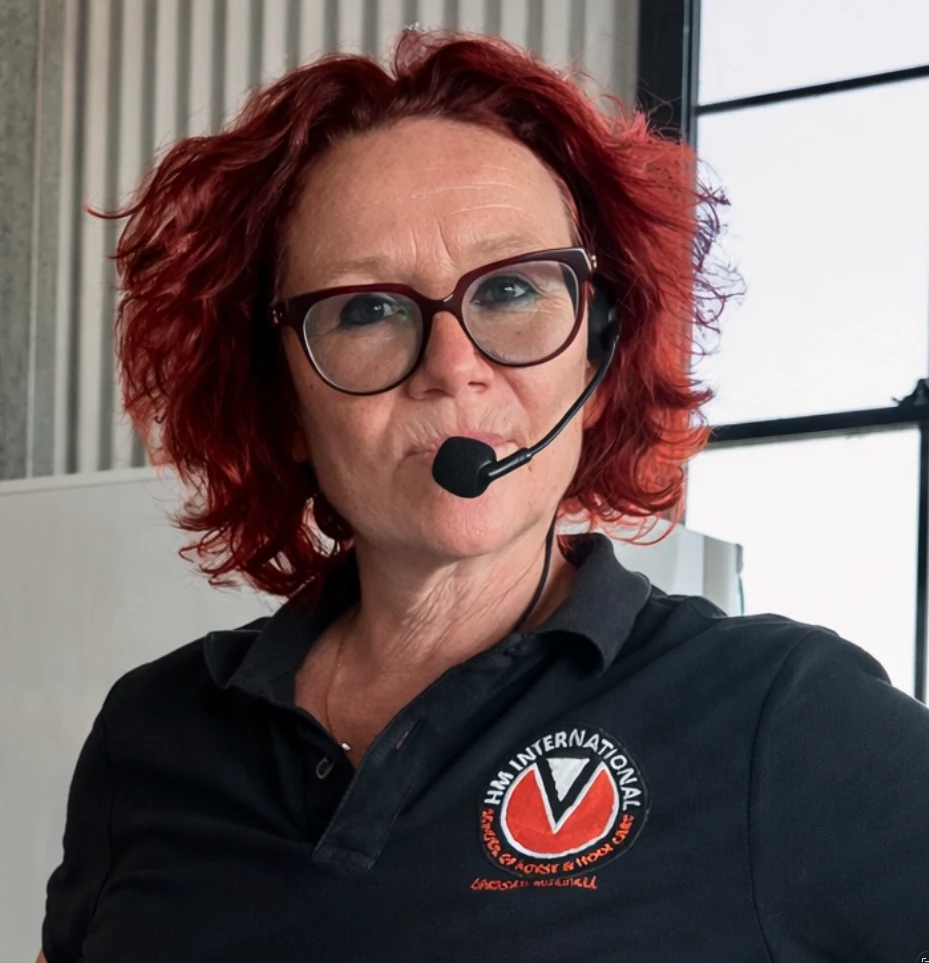
Lindsay Setchell, wearing an HM International polo shirt and headset microphone

Lindsay Setchell

Founder, Hoofing Marvellous

Director & Co-Founder, HM International School of Horse & Hoof Care

HMB Pro Instructor

More than twenty years of hoof rehabilitation, observation and anatomical examination have shaped Lindsay’s work and the development of The Phoenix Way. As founder of Hoofing Marvellous and co-founder of HMIS, she teaches owners and professional students to recognise anatomical relationships, document change and examine the reasoning behind hoof-care decisions. Her work brings practical rehabilitation experience into education, helping learners understand what they see and follow how it changes over time.

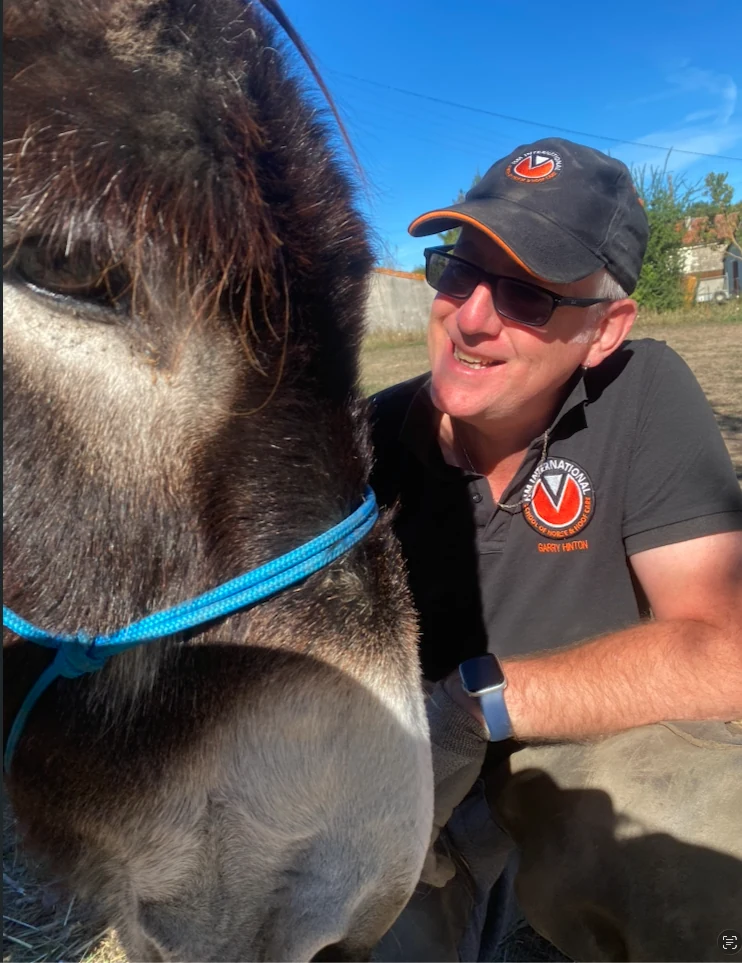
Garry Hinton, in an HM cap and polo shirt, smiling beside a donkey wearing a blue headcollar

Garry Hinton

Co-Founder, HM International School of Horse & Hoof Care

HMB Pro Instructor

Garry co-founded HM International School of Horse & Hoof Care with Lindsay and teaches students worldwide, both online and in person. An extensively experienced hoof-care practitioner, he has worked alongside Lindsay for many years, contributing to the development of the fundamental framework behind The Phoenix Way. His teaching connects practical experience with anatomical understanding, helping students and owners develop their observation, reasoning and hoof-care skills.

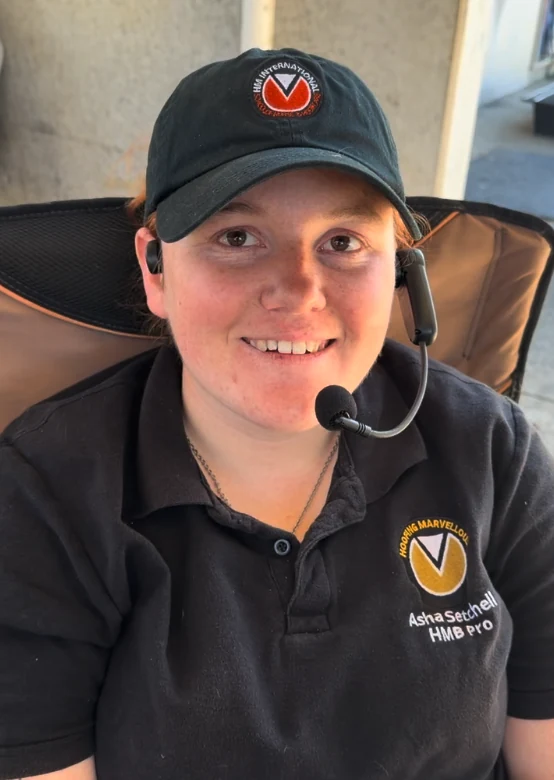
Asha Setchell, smiling, wearing an HM International cap and a Hoofing Marvellous polo shirt

Asha Setchell

HMB Pro Instructor

Lindsay’s youngest daughter, Asha grew up around horses undergoing rehabilitation and has attended more than fifty workshops worldwide. She now brings those years of observation and practical learning into her own teaching. An advocate for The Phoenix Way, she has developed considerable skill in explaining its principles to owners and professional students, teaching online and in person internationally and helping learners connect anatomical understanding with the changes they observe.

Behind the scenes

Rachael Hinton

Student and Booking Support

Rachael supports students and workshop attendees throughout their journey with HM. She coordinates onboarding, tracks student progress, manages bookings and orders, and helps ensure people receive the information and support they need.

Georgia Setchell

Workshop Logistics

Georgia coordinates the practical arrangements behind HM’s international workshops, including venues, agreements, travel and accommodation. Her work helps bring the teaching team, hosts and attendees together.

Better questions begin with better observation.

Owners see their equines between appointments, through changes in movement, behaviour and everyday comfort. Learning to photograph and observe consistently can make that information more useful.

We want owners to understand the language being used about their horses’ feet, recognise what needs further examination and participate in informed decisions alongside the professionals involved.

You can begin with our free teaching, explore The Phoenix Way, attend a workshop or ask about support for your equine.

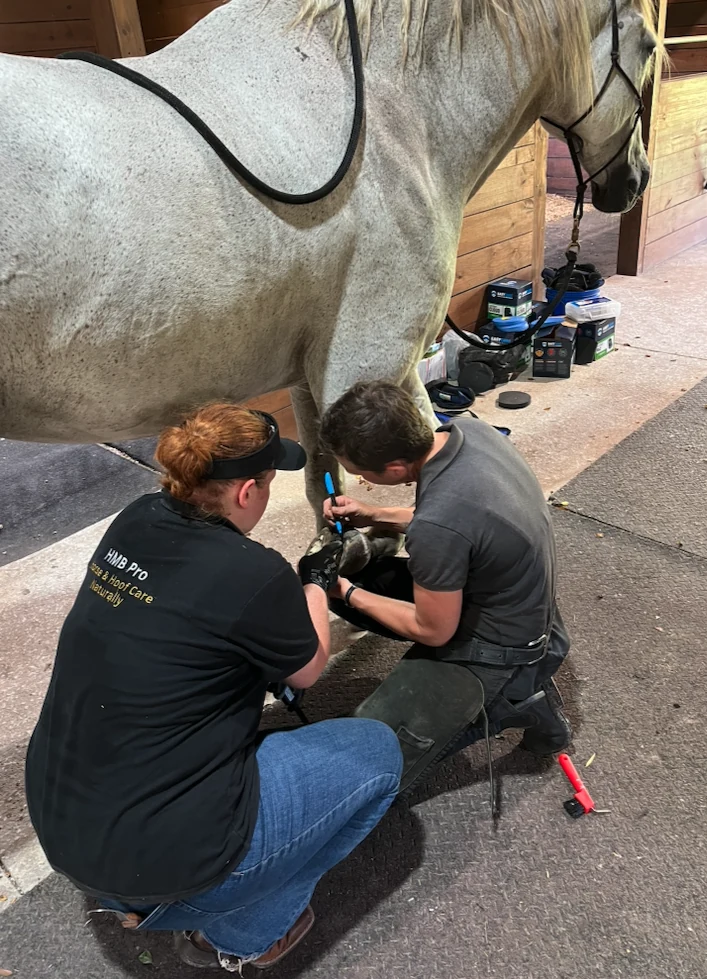
Asha teaching an owner how to recognise balance in her own horse's feet
Asha teaching an owner how to recognise balance in her own horse’s feet.